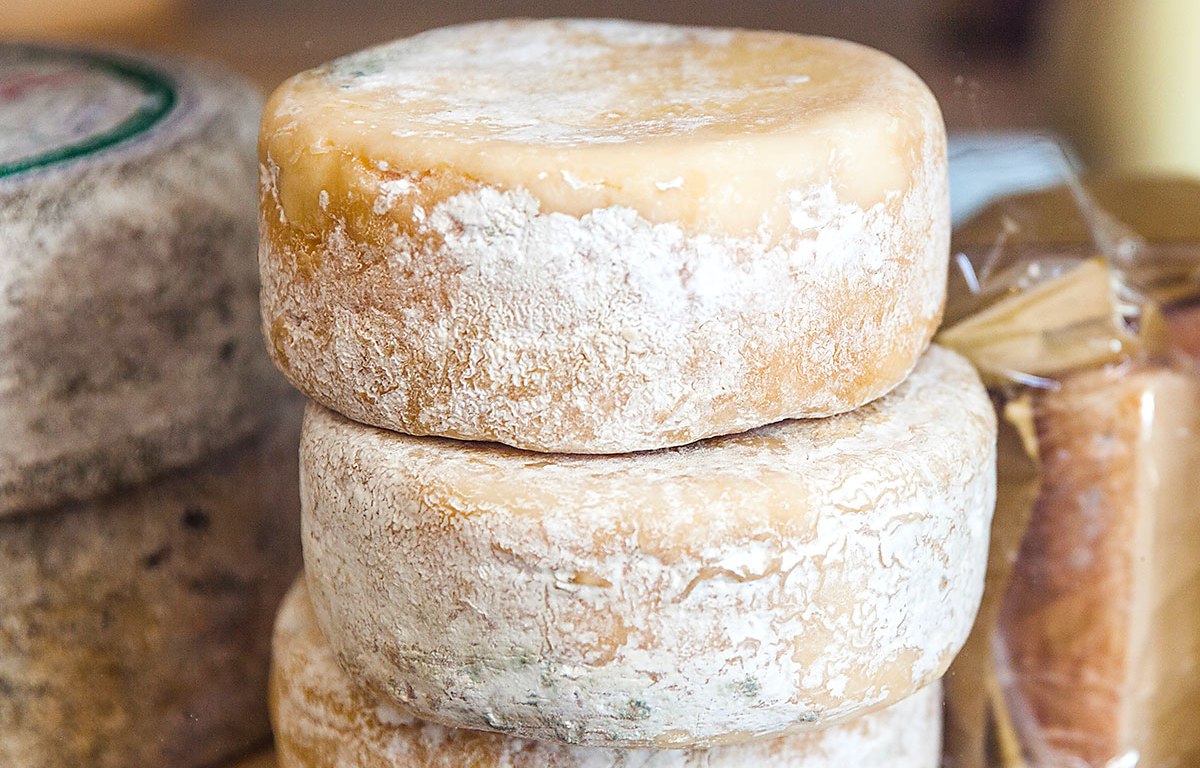
In honor of Virgilio, the Mantua-born guide of Dante, we present a recipe inicially written by Catone (De Agricoltura -IIsec a.C.). The original recipe in latin (see below) might look complicated, once you strat doing it, you will see that it is not difficult at all and the result is interesting.
I provide here the steps, in contemporary terms, so that it will be easier to read the latin recipe below
Although the original recipe is for a huge banquet, I rather prefer to make small cakes maximum 15 cm in diameter. You need 5 discs of dough. Pierced and cook them.

Prepare the filling, a cream of fresh sheep’s cheese and honey. The recipe says 14 pounds of cheese and 4.5 pounds of honey. In modern terms it would be 4 kg and 1.4 kg respectively. Indeed we won’t need this much filling, but we can take into account a proportion of 4 parts of cheese and 1,5 parts of honey.
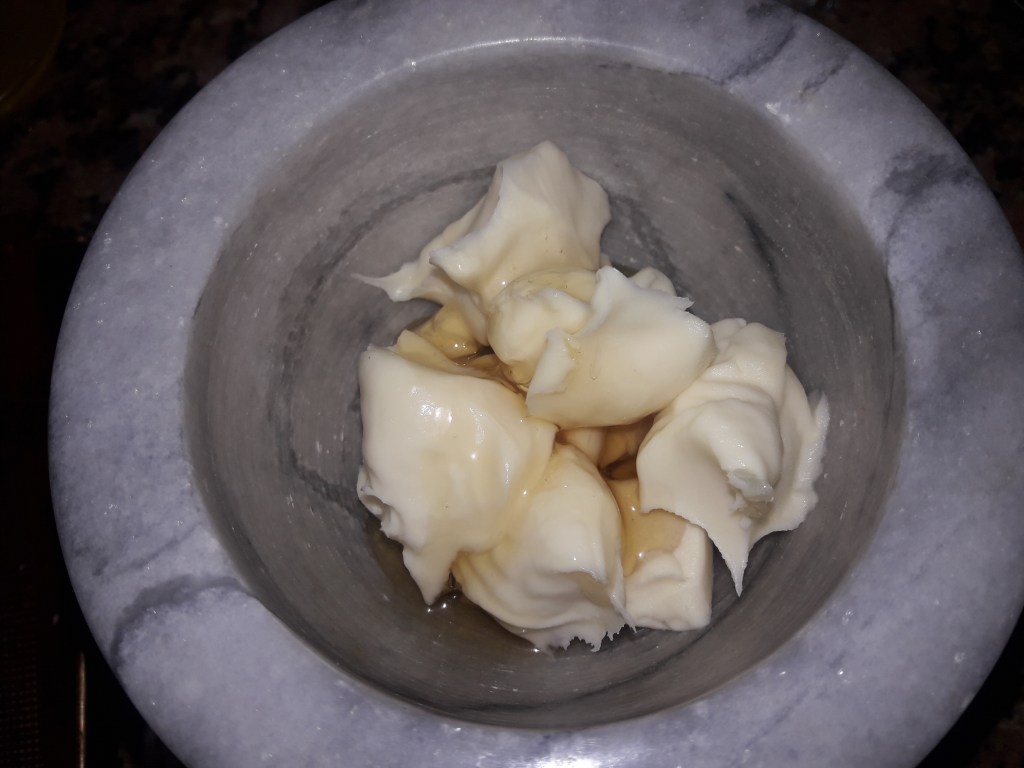
Pound honey and cheese together (transeat in mortarium). It is amazing how much the Romans loved mortars …If you don’t have a mortar, you can mix it well with a fork.
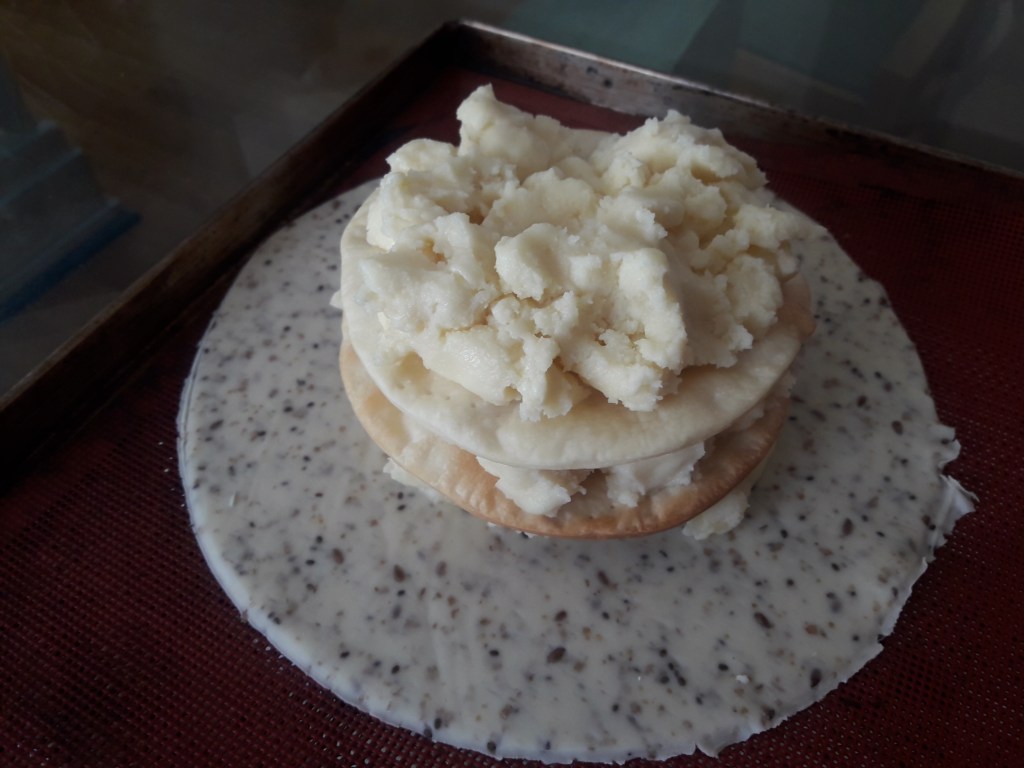
Now you “play” architect and build layers cake. It’s not very difficult. Alternate the round sheets that you had previously baked, with layers of cheese and honey. Finally you wrap everything with a raugh layer of pastry, larger and thinner:
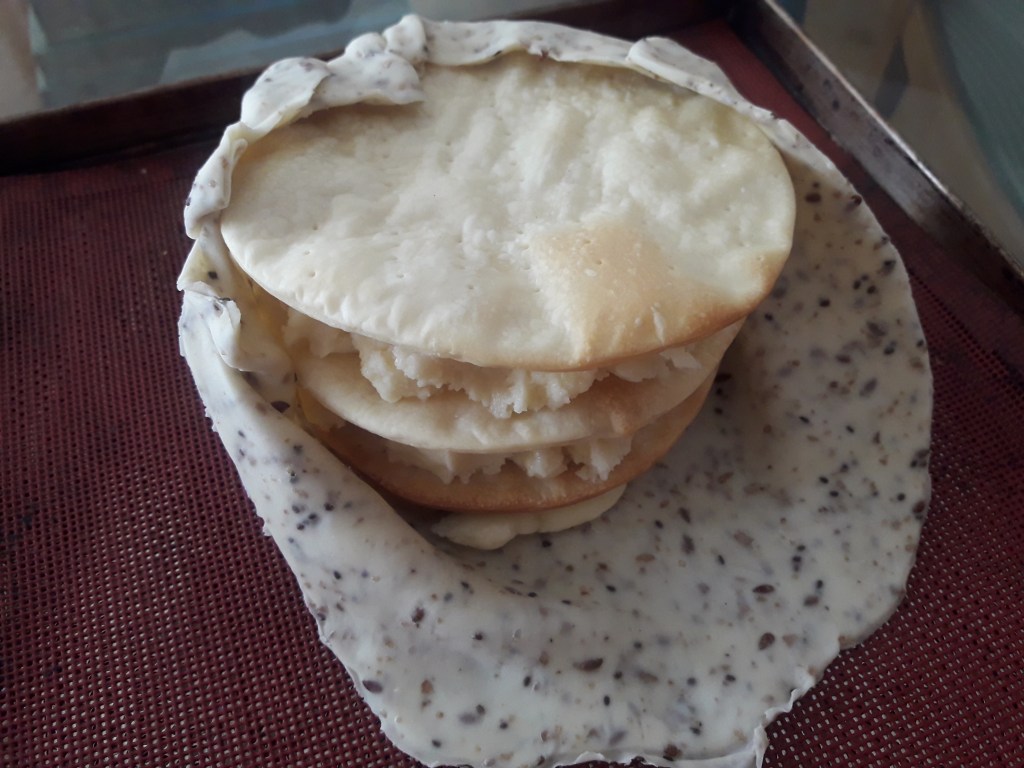
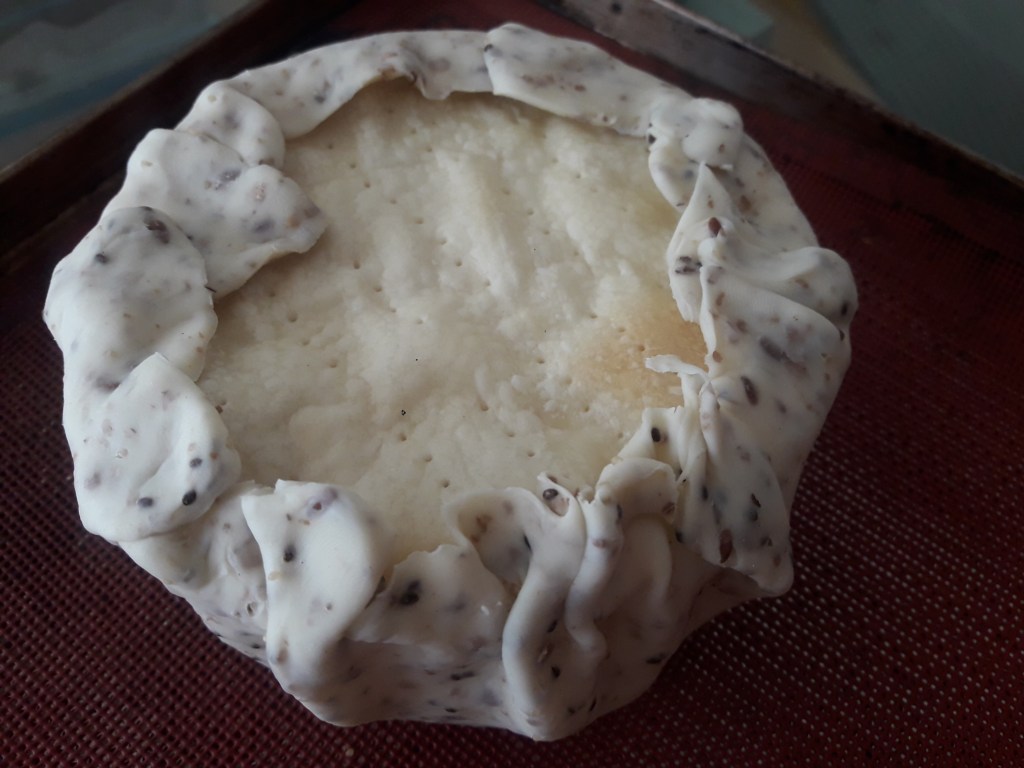
Flavor with bay leaves and bake: the creem melts quickly, so the baking time is defined by the wrapping. Serve hot, sprinkled with more honey.
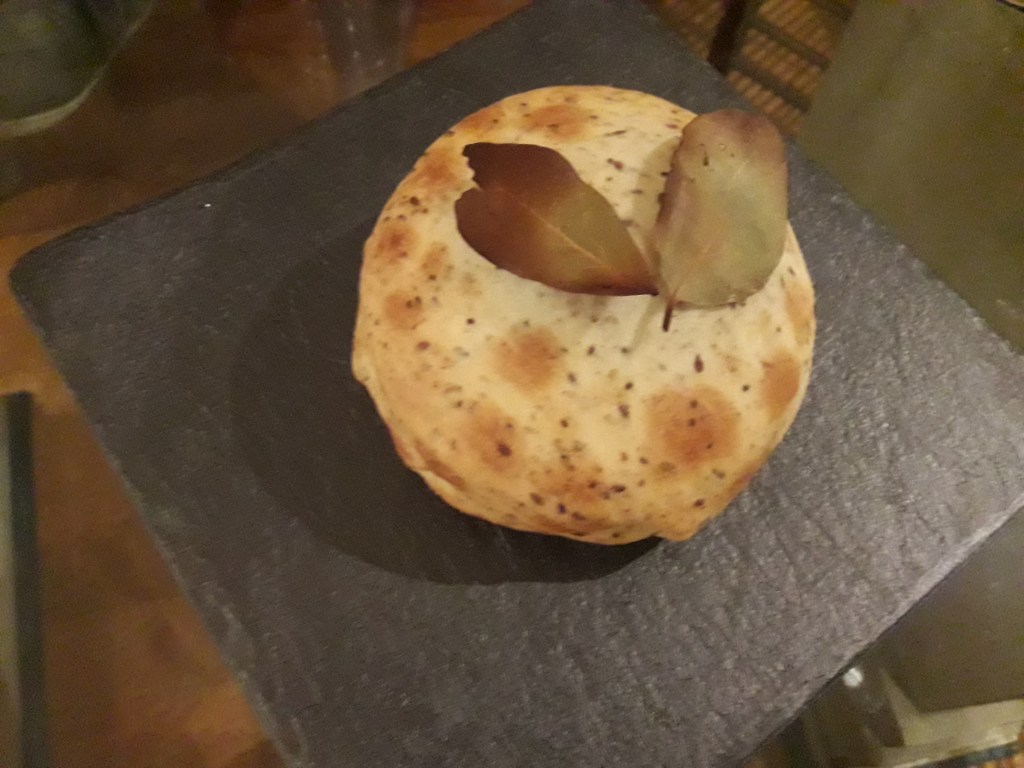
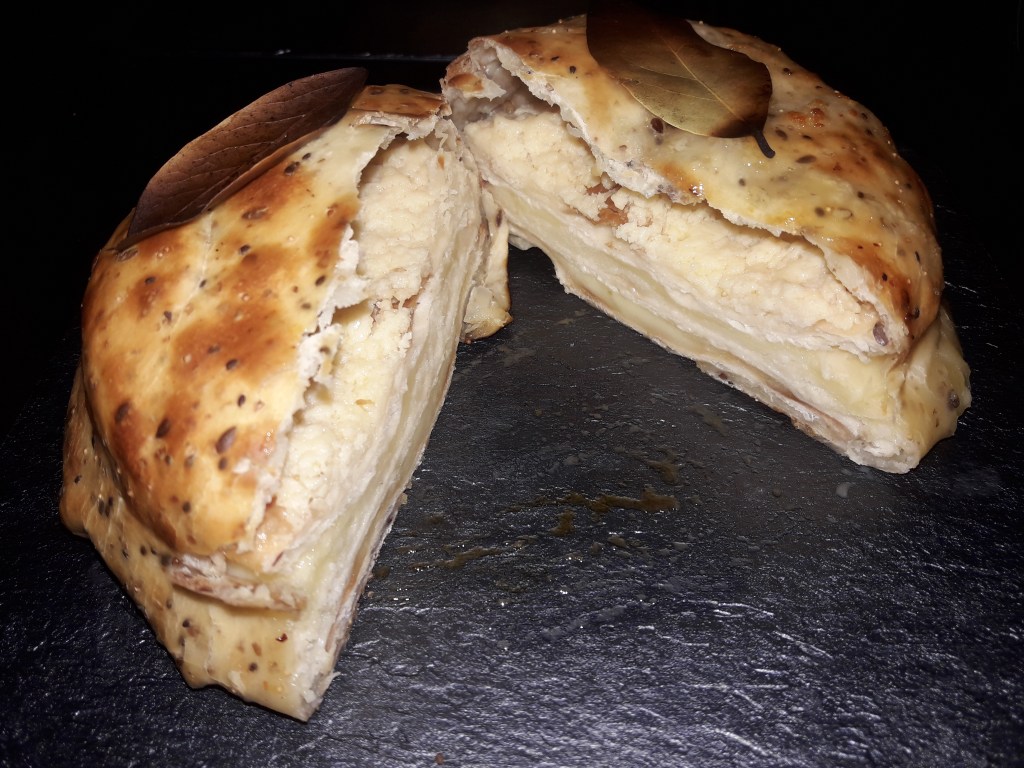

And here the original recipe, translated by the author of this blog (latin below)
Catone DE Agricoltura LXXVII
Prepare the placenta this way. About 600g of white wheat flour are needed to prepare the pastry that will wrap the cake; for the internal sheets [on the other hand] about 1.2 kg of wheat flour and 600g of top quality grain. Soak the grain in water. When it is well softened, leave it to dry in a clean mortar. Grind by hand. When it is well beaten, add the wheat flour (1.2 kg) a little at a time and prepare the sheets. Place in a basket to dry. When they are completely dry, arrange them well. When preparing the individual sheets, grease the surface you use for kneading with oil. Once the sheets have been prepared, cook them in the hearth by pre-heating the covered pan. Next, prepare the leaf for wrapping the cake by mixing 600g of wheat flour. Soak about 4 kg of fresh sheep cheese in the water, changing the water three times. Remove from the water and squeeze it briefly with your hands, then, once dry, put it in the mortar. When the cheese is dry, break it and crush it by hands in a dry mortar. Sift it. Add 1.4 kg of good honey and mix with the cheese. Then place the pastry wrap on a clean one foot wide table, with greased bay leaves placed underneath, and put the cake together. Place a single sheet on the bottom of the cake and spread the mixture of cheese and honey, one sheet at a time until all the cheese and honey have been used. Put a single sheet on top, then close the bottom and decorate. Clean and prepare the oven, then place the cake (placenta) covered with the hot lid (testum), placing the coals on and around. Check that it cooks well and slowly. Open to check two or three times when it is well cooked, remove from heat and pour honey over it. This will be a half bushel cake.
Testo originale
Placentam sic facito. Farinae siligineae L. II, unde solum facias, in tracta farinae L. IIII et alicae primae L. II. Alicam in aquam infundito. Ubi bene mollis erit, in mortarium purum indito siccatoque bene. Deinde manibus depsito. Ubi bene subactum erit, farinae L. IIII paulatim addito. Id utrumque tracta facito. In qualo, ubi arescant, conponito. Ubi arebunt, conponito puriter. Cum facies singula tracta, ubi depsueris, panno oleo uncto tangito et circumtergeto ungitoque. Ubi tracta erunt, focum, ubi coquas, calfacito bene et testum. Postea farinae L. II conspargito condepsitoque. Inde facito solum tenue. Casei ovilli P: XIIII ne acidum et bene recens in aquam indito. Ibi macerato, aquam ter mutato. Inde eximito siccatoque bene paulatim manibus, siccum bene in mortarium inponito. Ubi omne caseum bene siccaveris, in mortarium purum manibus condepsito conminuitoque quam maxime. Deinde cribrum farinarium purum sumito caseumque per cribrum facito transeat in mortarium. Postea indito mellis boni P. IIII S. Id una bene conmisceto cum caseo. Postea in tabula pura, quae pateat P. I, ibi balteum ponito, folia laurea uncta supponito, placentam fingito. Tracta singula in totum solum primum ponito, deinde de mortario tracta linito, tracta addito singulatim, item linito usque adeo, donec omne caseum cum melle abusus eris. In summum tracta singula indito, postea solum contrahito ornatoque focum deverrito temperatoque, tunc placentam inponito, testo caldo operito, pruna insuper et circum operito. Videto ut bene et otiose percoquas. Aperito, dum inspicias, bis aut ter. Ubi cocta erit, eximito et melle unguito. Haec erit placenta semodialis.
 Storia e storie in cucina